Before leaving
Oaxaca we had convinced one of our oldest and dearest friends from
Chicago to come down and spend a little time with us. We knew he liked
to visit Playa del Carmen, and on our visit there in 1996 we found it
to be a very nice, quiet, laid back spot with a lot of French and
Italian expats. Even though he couldn't make it for at least ten more
days then we wanted to spend in Mexico, we decided rather than go
straight south into Guatemala we would head over to the Yucatan and
wait for him. We headed south to the Istmo de Tehuantepec, then east
through Chiapas.
|
|
Our route would take
us through Juchitán de Zaragoza which sits at the base of
narrowest part of Mexico's Isthmus de Tehuantepec. Juchitán is
famous for its muxes--pronounced
moo-shays--which are openly gay cross dressing men. The muxes are widely accepted in this
region, and in fact it is thought that according to how a male child is
positioned at birth, or what activities he is interested in as a child
that determines how the child is to be raised, and many are therefore
raised as women. They typically perform tasks that are associated with
women, and many of them marry men. They are known for some of the most
exquisite needle-work in the region and typically wear elaborately
decorated huipiles and typical traditional native garb. We felt that it
was innapropriate to gawk or take pictures, but if you google the term muxe there are many fine examples
of there native dress on the web. We did encounter the handsome gent
above in the atrium of our hotel though.
|
|
As
we climbed east from Juchitán which is near sea level we passed
through cloud forest with fog so dense that we had to ride the white
line on the edge of the road and try to stay within 5 or 6 feet of one
another. Any farther than that and it was impossible to see each other.
Once we reached San Cristobal de las Casas at more than 7,000 feet we
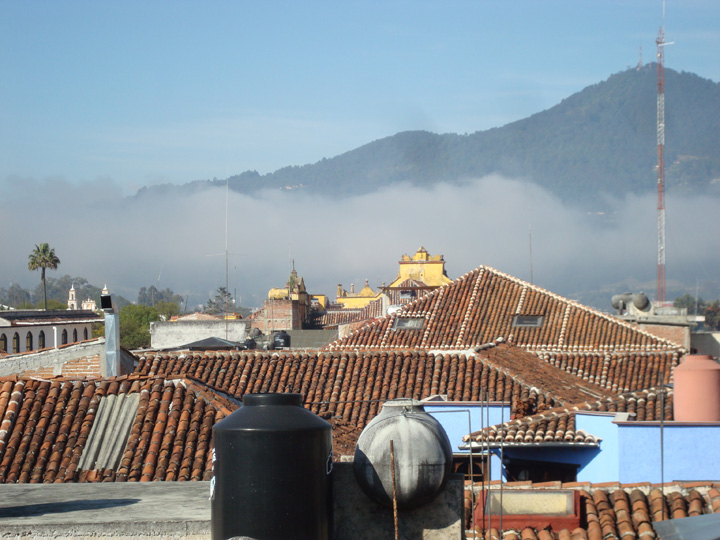
were for the most part above the clouds. This is the view from the
window of our hotel.
|
|
The
last time we had visited this region was in 1996, two years after the
political uprising spearheaded by the Zapatistas under subcomandante
Marcos. Marcos by that time had become a very mediagenic commodity, and
journalists and would-be documentarians outnumbered the revolutionaries
and were still flocking to this region to televise the revolution.
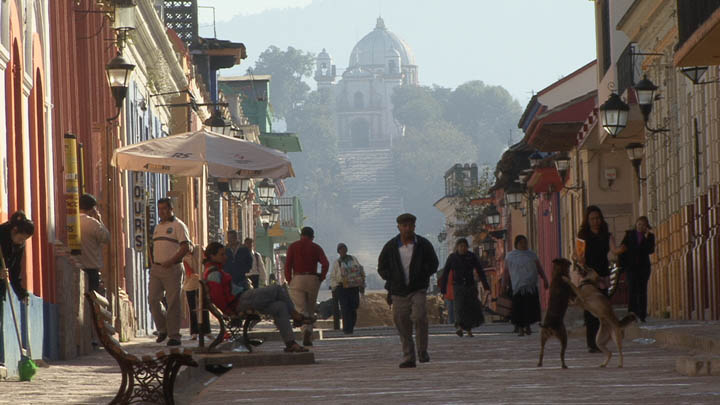
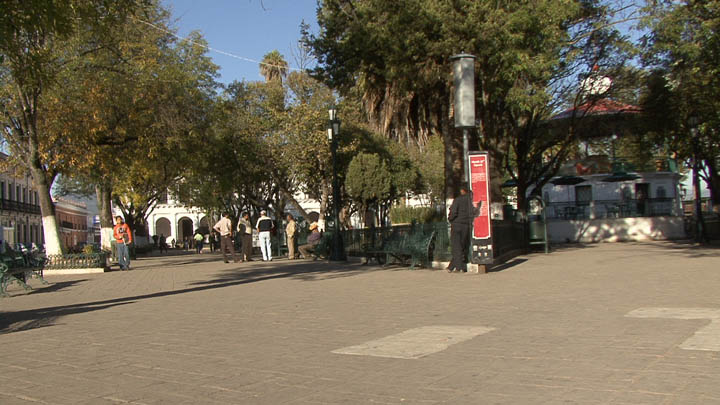
Today, streets leading in every direction from the well groomed Zocalo
are newly cobbled and sport "rustic" lighting and sidewalk cafes
serving foods from around the globe. Poli-sci majors and NGO workers
flock to San Cristobal, and in a classic example of capitalism
co-opting political struggle there is even a bustling night spot called
the "Revolución Cafe Bar".
|
|
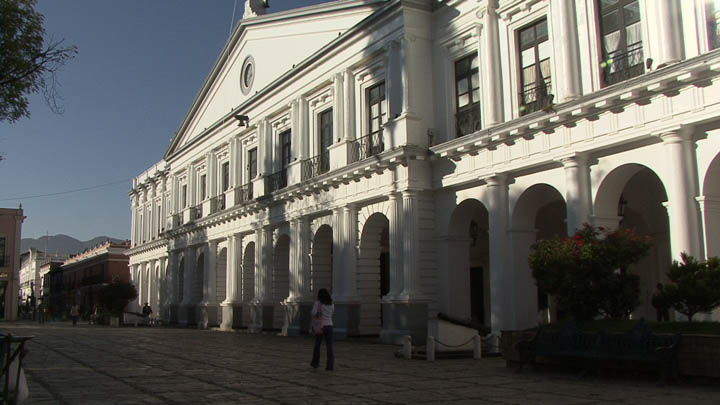
The
Oficina de Gobierno above sports a new coat of paint. It faces the well
manicured Zocalo below.
|
|
|
|
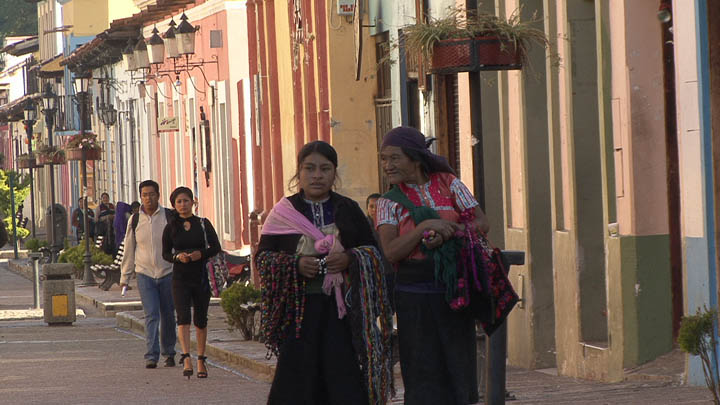
In kind of a sad twist to the
revolutionary efforts of the last few decades, locals who can no longer
afford to live in what has become an upscale vacation spot for young
people in Che Guevara t-shirts, now ride buses into San Cristobal to
sell beads and trinkets to those who think they are here to help.
|
|
Don't
get me wrong. I still feel that for anyone like myself who has studied
anthropology for no other reason than a desire to know, this southern
part of Mexico and all of Guatemala is the motherlode. A good example
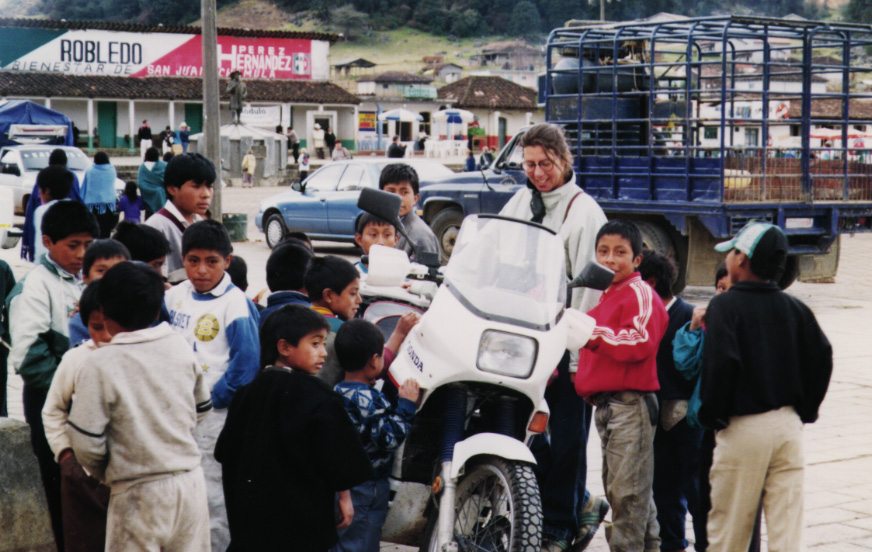
though of how tourism has changed this region is the photo above. This
is the town of Chamula--still one of the most visited of the indigenous
communities near San Cristobal de las Casas. This photo is from 1996,
and we were treated like rock stars. Here in 2009 we were surrounded
instead by village men wanting us to move our motorcycles from the
street where we had parked and then to pay for parking.
|
|
|
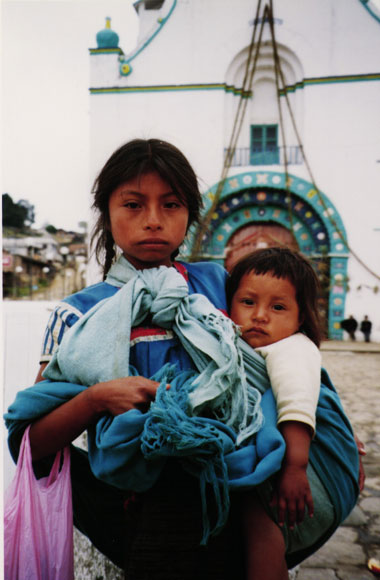
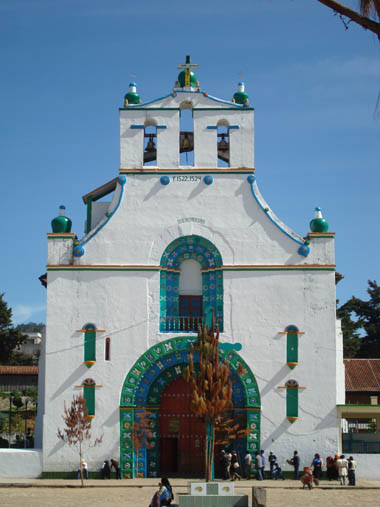
The main draw for
Chamula is the church above. The photo on the left once again is from
1996 and this girl eagerly posed for the hopes of getting a few pesos.
We were allowed to visit the church, which is itself a classic example
of religious syncretism, as long as we didn't take pictures inside. At
right the church today is fenced off and this is as close as you are
allowed to get to it without paying to enter the courtyard.
|
|
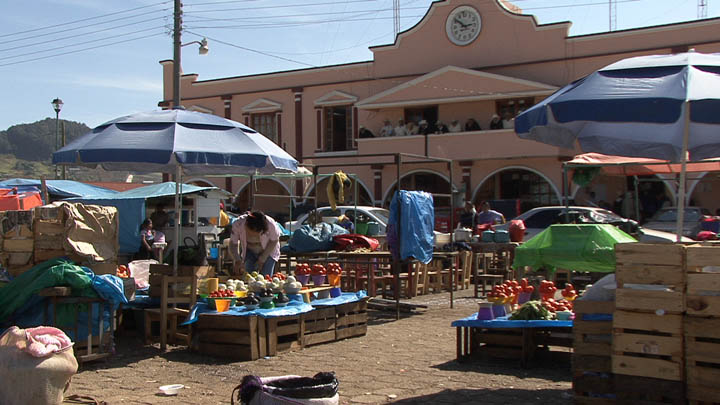
On
the day we visited Chamula the local vegetable and fruit market was
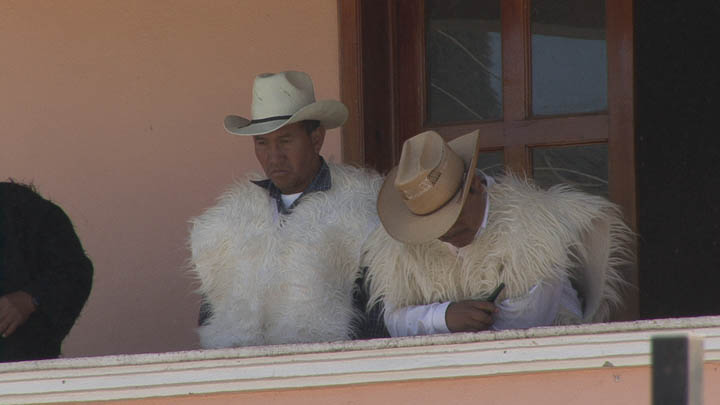
taking place adjacent to the church yard. Note the men on the balcony
of the building in the background. The photo on this page of Karen and
her motorcycle surrounded by school children was shot below that
balcony. Today the members of the all male town council use that
vantage point to make sure that nobody parks in Chamula or tries to
visit the church without paying (see close-up below).
|
|
|
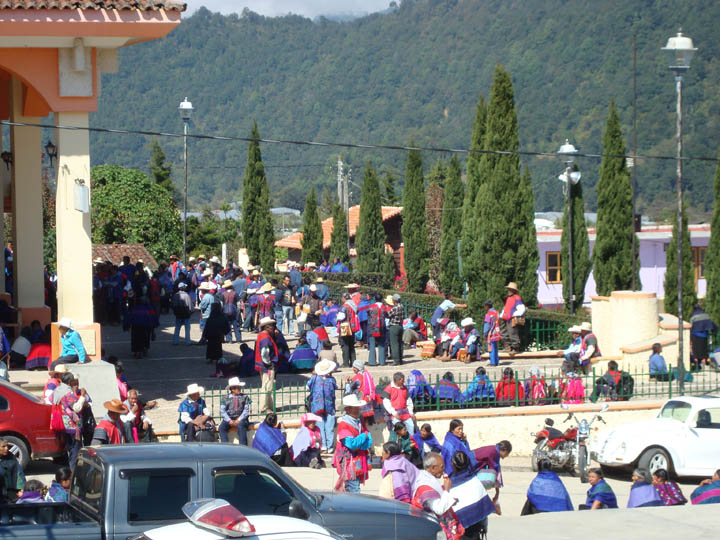
In
contrast, the less visited San Lorenzo Zincantán sits a bit
farther away from San Cristobal, and although the locals are shy and
reluctant to face the camera, they are more open and invitinf then
their neighbors at Chamula. We even had an older resident approach us
to show us the safest place to park the motorcycles, with no hint
whatsoever of wanting money or to do anything other than help us. The
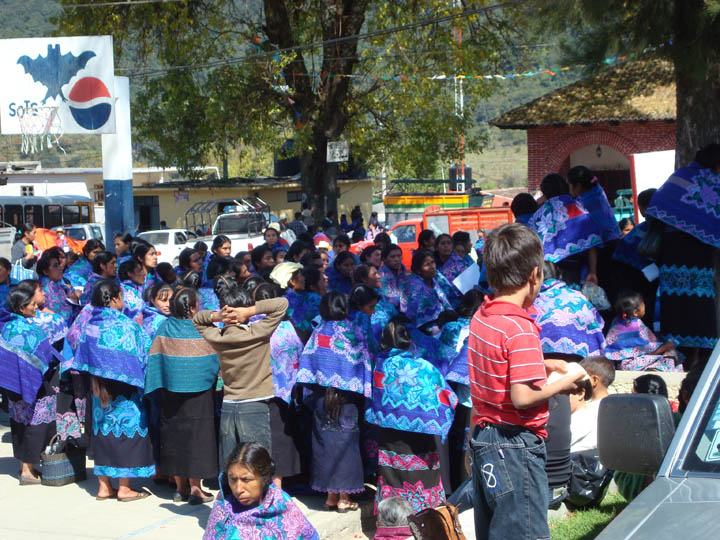
photo above was a gathering in front of the village council building,
and as you can see both men and women are in evidence. Both wear the
exquisitely decorated shawls that are typical of the area.
|
|
The
overflow of women gather in the basketball court to hear the council
members speaking over loudspeakers. The colors that identify them as
members of this community are very much in evidence. The name
Zincantán is a Nahuatl word. In the Tzotzil language spoken by
somewhat more than 95% of the locals here this place is referred to as
"Sots'leb". Both Zincantán and Sots'leb translate to "Land of
Bats". You will notice the word and symbol on the basketball backboard.
|
|
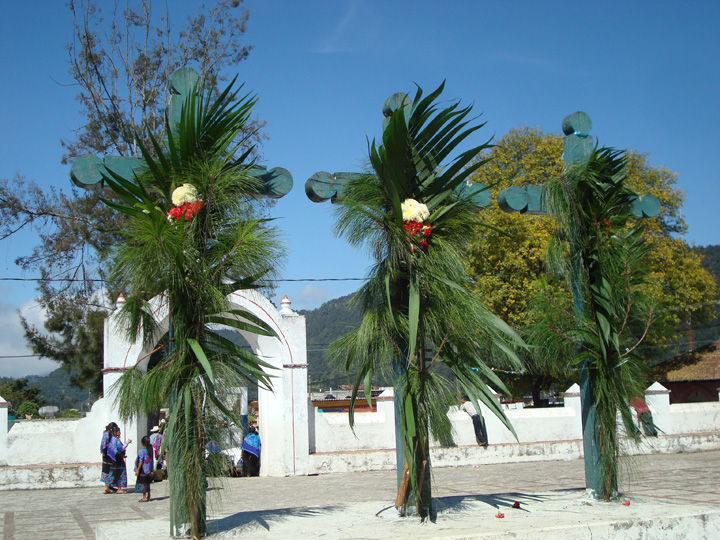
The
crosses that sit in front of San Lorenzo's modest chapel were decorated
for Christmas. There was no charge for admission.
|

|

|
|
|

|