|
|
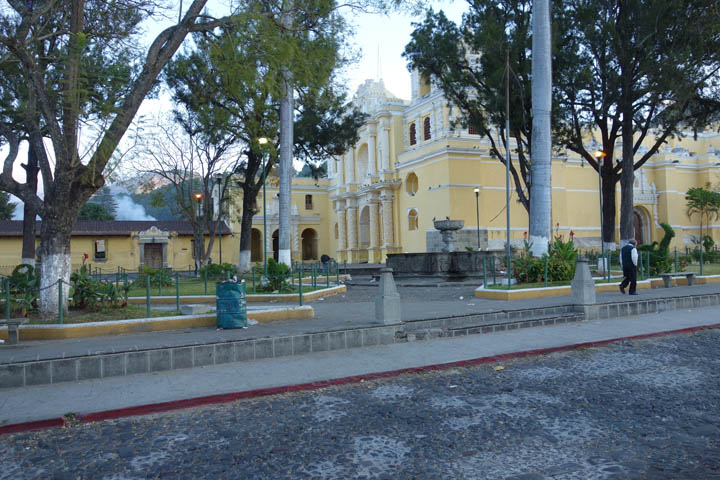
As you enter Antigua from the north, your first landmark of note is the
plaza of the Iglesia y Convento de
Nuestra Señora de la Merced. Of the dozen or so iglesias
in town it is perhaps the most beautiful, even more so than the
Catedral de Santiago on the town's Parque Central. The only unfortunate
thing about the timing of our visit is that it came on the week of New
Year, one of the two busiest times of the year. The beautiful posada
where we stayed for part of our stay last time doubled in price for
this weekend to more than a hundred dollars US, and it had a minimum
three day stay. We had called ahead from Pana to insure we had
something, although it was not as elegant as we might have liked. There
is no overnight parking on the street, and the narrow passageway into
the hotel actually housed a small tavel agency. We literally had to
pick up the desk and carry it off to one side of the interior
courtyard, and then remove the saddlebags from one side of the bikes to
get them in.
|
|
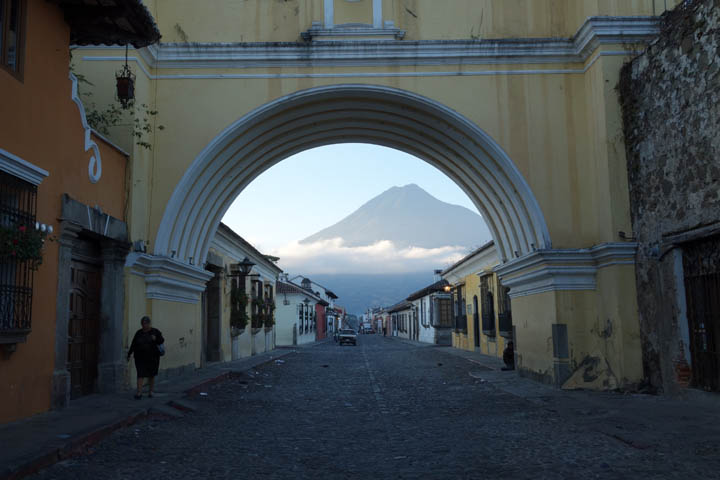
This
archway, a block over from our hotel was the scene of New Year's Eve's
largest fireworks display. In truth though, there were large displays
being shot off from no fewer than five different locations in the town.
This early morning shot is quite a contrast to the throng that flooded
the intersection here the night before. You can watch the clock turn
over from 2012 to 2013 HERE!
|
|
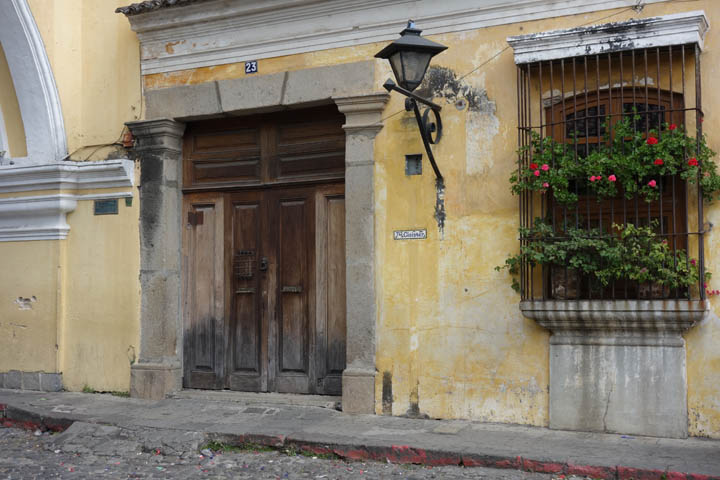
Adjacent
to the arch another former cloister is now an upscale boutique hotel.
|
|
|
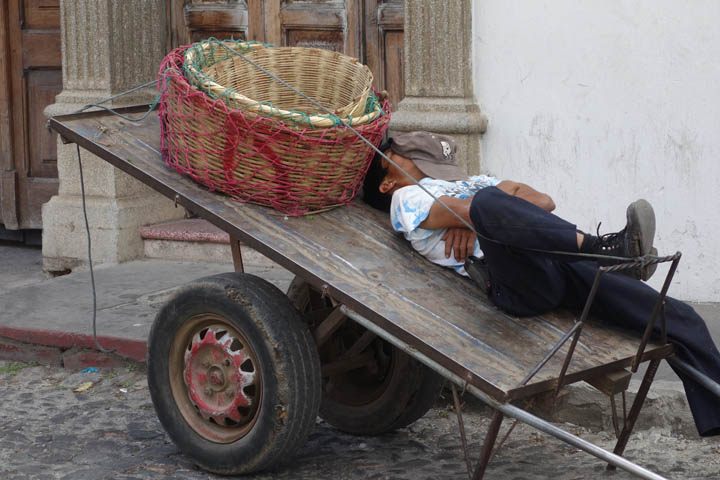
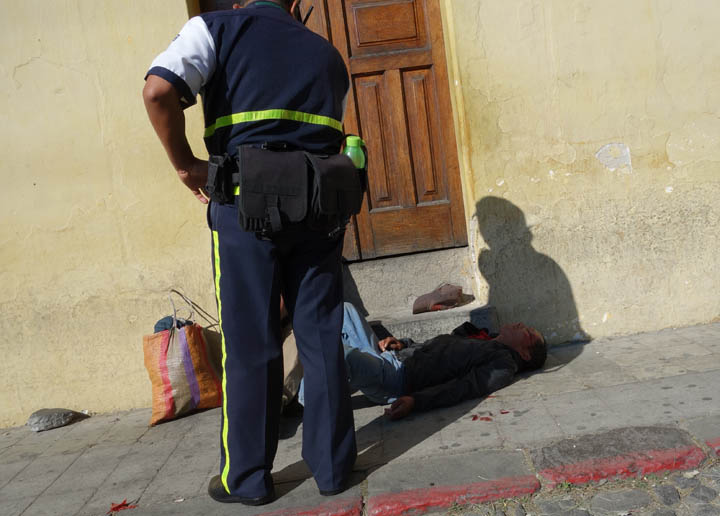
New Year's day
revealed people showing the results of too much partying. It ranged
from sleepy vendors like the one above, to the apparently bellicose
like this indigenous man below. He had a lump the size of a pigeon egg
above his eye and blood was splattered around him on the sidewalk. His
companion--concealed behind the policeman--was only slightly less drunk.
|
|
|
Antigua
also sits in the shadow of several volcanoes and you can often see
steam venting from one or the other. The largest in the area, Pacaya,
was actually flowing hot lava on our 2009 visit. You can see it on the
top photo 2nd from left on this page's masthead.
|
|
|
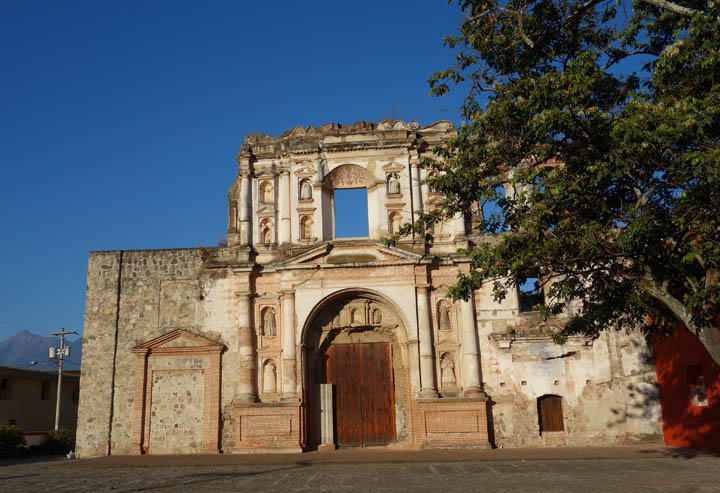
Antigua
infact has such volatile siesmic activity, that over the centuries it
has been the nation's capital, and been abandoned, has had cycle of
boom and bust, it has been inundated by mudslides and rocked by
earthquakes. The most recent major event in 1976 undid much of the
restoration work, and the town is full of grand old structures such as
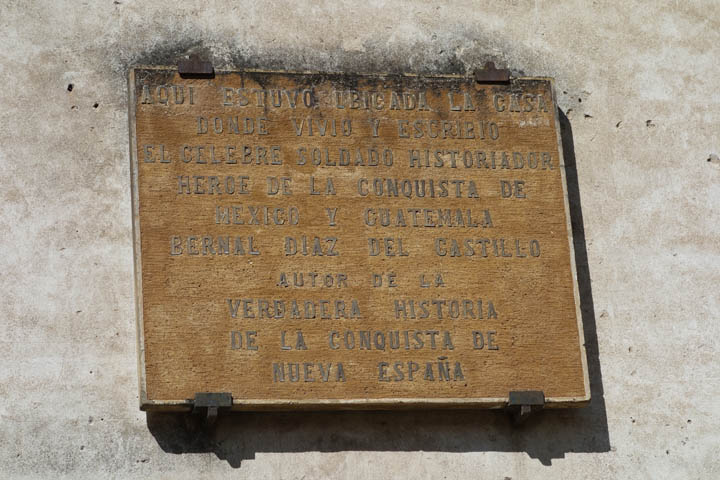
this one that are missing portions of walls and roofs. I had
photographed this building before without having noticed this small
plaque on its side.
|
|
As
a student of MesoAmerican history, this is a very significant site. The
sign reads "Here was located the house where the celebrated soldier
historian and hero of the conquest of Mexico and Guatemala lived and
wrote. Bernal Diaz del Castillo the author of 'The True History of the
Conquest of New Spain'". A large portion of what we know about the
Aztec Indians of Mexico came from the narratives of this barely
literate foot soldier who fought under Hernán Cortés. His
accounts tell of the majesty of the Aztec capital Tenochtitlan in what
is now Mexico City. For anthro students or anyone studying Latin
America it is required reading.
|
|
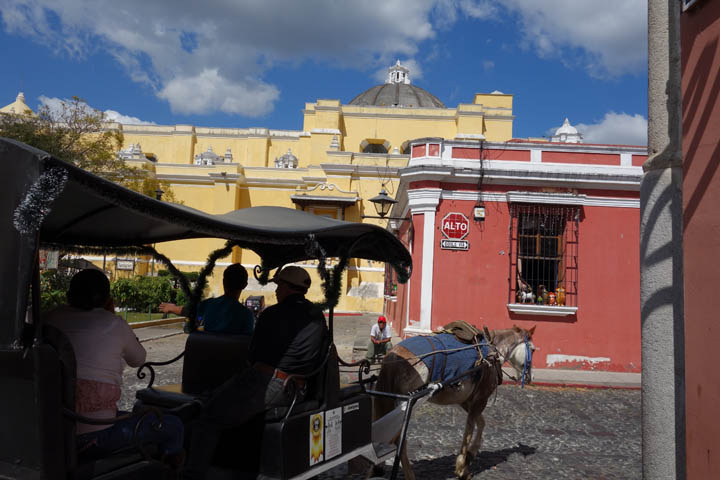
Horse-drawn
carriages ply the town's center on weekends and holidays. While it is
definitely a "tourist" activity, it is a nice way to see the historical
center.
|
|
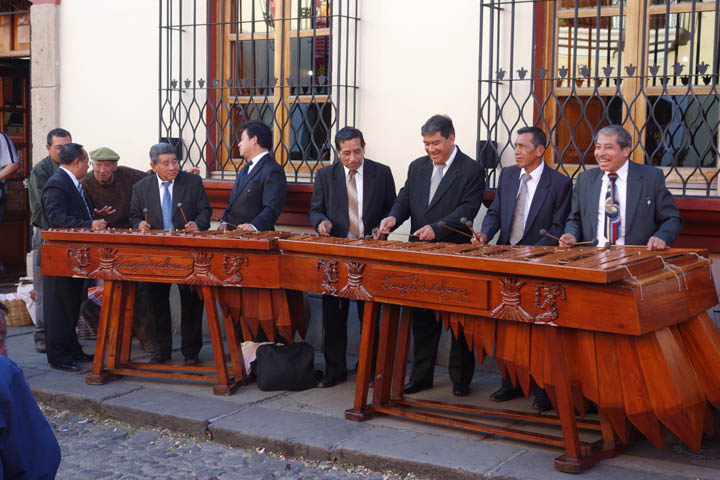
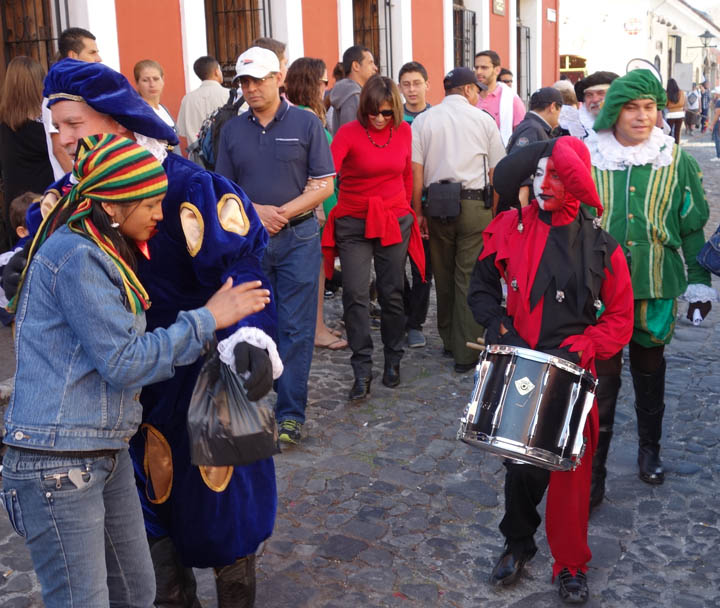
There
is seldom a shortage of festivities at holiday time; whether it is
marimba bands like the one above, or period musicians and jesters like
those below.
|
|
|
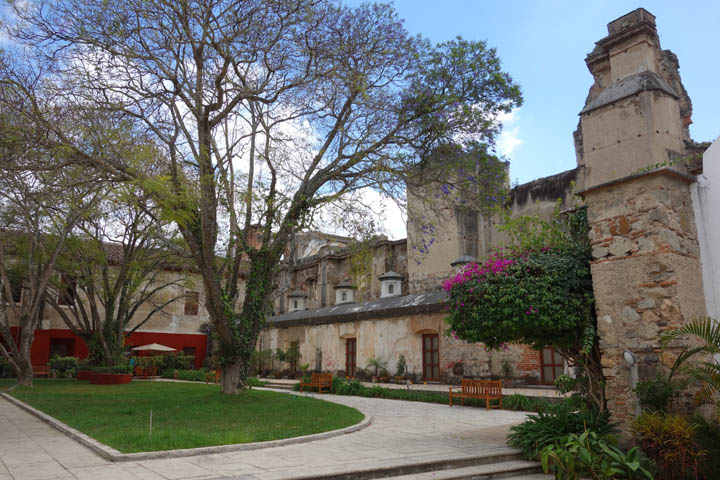
We
had walked past the building on the left side a half dozen times but
always on the next street behind it. Other than a large red building
with three -foot thick walls, there was little other than a small sign
announcing that it was the Spanish Embassy to Guatemala. We were
pleased to find this courtyard on the opposite side with pleasant
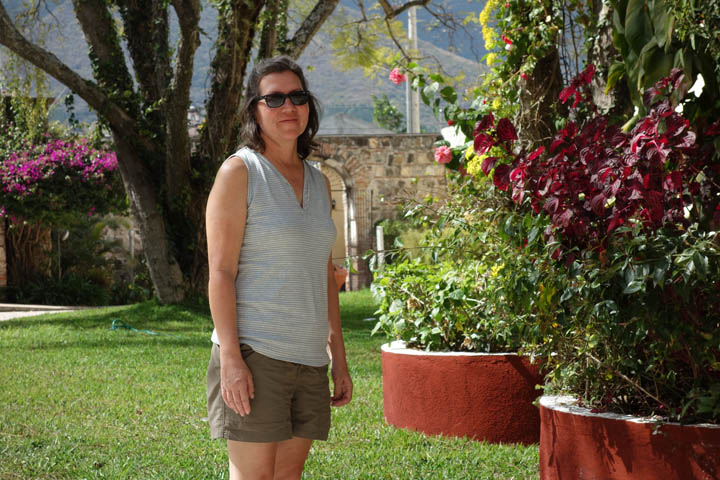
gardens and a good Spanish restaurant. Below Karen enjoys the flowers.
|
|
|
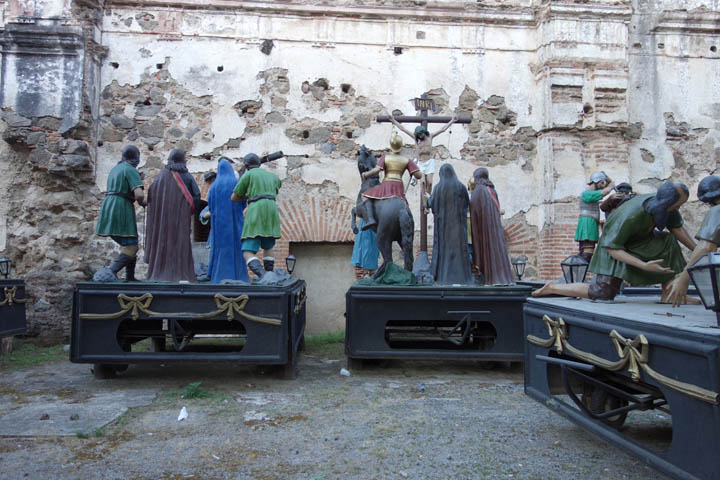
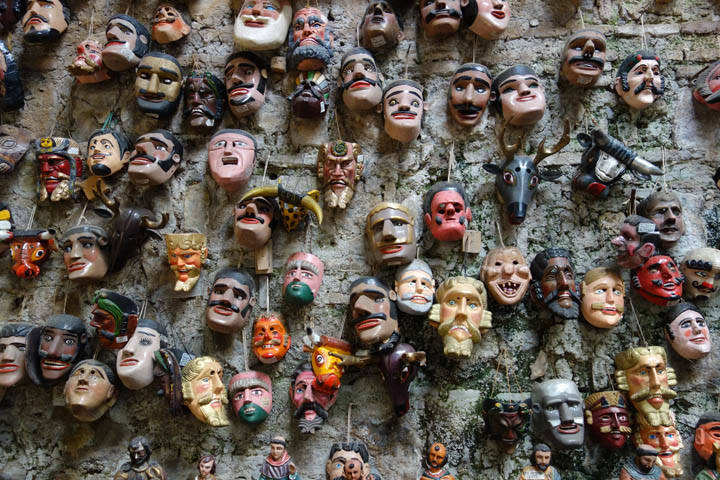
Everywhere
you looked there were hidden treasures--like this small lot that had
these Semana Santa "floats",
and this shop with walls full of masks (below).
|
|
|
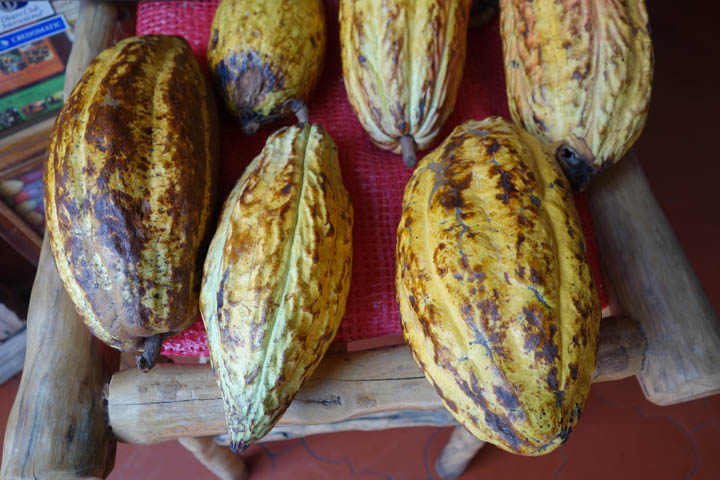
The
town was also full of small chocolate shops, some of which displayed
the entire process from the raw cacao fruits above to finished sweets.
|
|
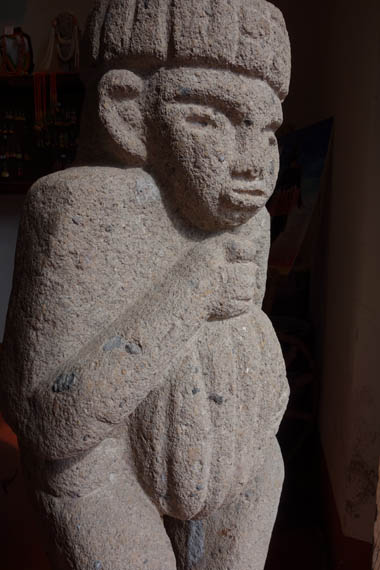
This one even had a
replica of an ancient mayan statue holding a cacao fruit. Among the
Maya, the drinking of cacoa was something reserved for royalty and
priests.
|
|
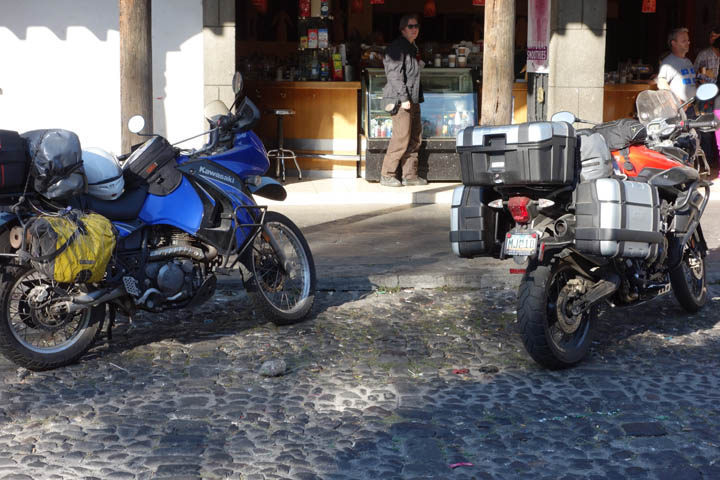
Before
heading out we took the risk of dealing with parking enforcement so we
could enjoy one last espresso at our favorite coffee place on the
square.
|

|

|
|
|

|